


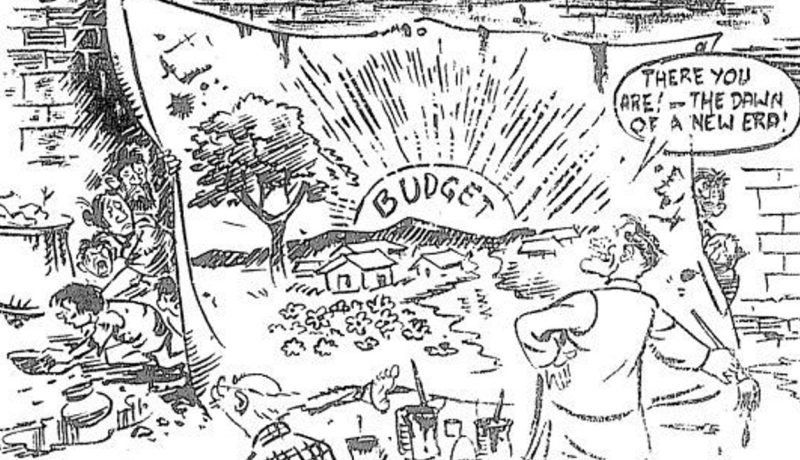
Finance Minister Nirmala Sitharaman presented the Union Budget 2026-27 on 1st February, 2026, emphasizing sustained growth, manufacturing revival, and fiscal prudence in a volatile global environment. The speech outlined three “kartavyas”: accelerating economic growth, fulfilling aspirations, and ensuring inclusive development under “Sabka Sath, Sabka Vikas.
Table Of Content
- Constitutional Basis of the Budget
- Lok Sabha’s Exclusive Role and Presidential Powers
- The Stages of Budget Approval
- Union Budget 2026-27
- Overarching Tax-Legal Reforms
- Corporate Tax and MAT Overhaul
- Compliance, Litigation and Penalty Reform
- Indirect Tax and Customs Modernization
- Broader Fiscal and Policy Initiatives
- Fiscal Consolidation
- Implications and Outlook
But before diving into this year’s Budgetary proposal it is pertinent to have a briefly about its constitutional provisions.
Constitutional Basis of the Budget
Article 112 of the Indian Constitution requires the President to “cause to be laid” before Parliament an Annual Financial Statement — the formal term for the Union Budget — for every financial year. This language creates a constitutional obligation on the President to ensure that the nation’s financial estimates are presented to Parliament annually. In practice, this responsibility is fulfilled by the Union Finance Minister, following constitutional convention also more specifically stated in Rule 43 of the General Financial Rules, 2017.
While the Constitution does not mandate it, the Budget speech is traditionally divided into two parts:
- Part A outlines the government’s economic vision, key policy announcements, and expenditure allocations across sectors.
- Part B deals with taxation proposals, including changes to direct and indirect taxes.
The Budget details the government’s estimated receipts and expenditures, and divides expenditure into two categories:
- Charged expenditure includes salaries of the President, judges of the Supreme Court and High Courts, interest on national debt, and a few others. These are automatically deducted from the Consolidated Fund of India and do not require a vote in Parliament.
- Votable expenditure includes all other government spending and must be approved by the Lok Sabha through Demands for Grants under Article 113. Importantly, no such demand can be made without the President’s recommendation, reinforcing executive accountability in financial matters.
Lok Sabha’s Exclusive Role and Presidential Powers
The Union Budget and all Money Bills, which include the Finance Bill and Appropriation Bill — can be introduced only in the Lok Sabha, and that too only with the President’s prior recommendation, as per Articles 110 and 117. While the Annual Financial Statement (Article 112) is laid before both Houses of Parliament, only the Lok Sabha votes on the spending proposals. The Rajya Sabha can discuss the Budget, but it cannot vote on the Demands for Grants.
When a Money Bill (like the Finance Bill) is passed by the Lok Sabha, it is sent to the Rajya Sabha, which has 14 days to offer non-binding recommendations. The Lok Sabha may accept or reject these suggestions, and if no action is taken within 14 days, the bill is deemed passed in its original form. Under Article 111, the President must give assent to a Money Bill — he cannot return or veto it. This framework ensures that decisions on taxation and spending rest primarily with the democratically elected House of the People.
The Stages of Budget Approval
Once the Budget is presented, it passes through several stages:
- General discussion takes place in both the Lok Sabha and Rajya Sabha.
- The Lok Sabha votes on the Demands for Grants — that is, the spending requests made by each ministry or department.
- After these are approved, the government introduces the Appropriation Bill under Article 114 to legally authorize withdrawal of funds from the Consolidated Fund of India. Neither House can amend this bill in a way that changes the amount or purpose of any grant or charged expenditure.
- Finally, the Finance Bill — which includes tax proposals — is passed exclusively by the Lok Sabha as a Money Bill, with the Rajya Sabha playing only an advisory role.
Only after these bills are enacted and the President gives assent do the Budget provisions become law, and the government can begin to collect taxes and spend public money accordingly.
Union Budget 2026-27
The 2026-27 Union Budget (presented Feb 1, 2026) balances an ambitious growth agenda with tax-law simplification. It projects 10.4% nominal GDP growth for FY27, driven by a continued push to expand manufacturing and boost services.
Public capex is being ramped up sharply from ₹11.2 lakh crore in FY2025-26 to ₹12.2 lakh crore in FY2026-27 – and major infrastructure programs (new freight corridors, waterways, high-speed rails, etc.) will be financed to sustain this momentum. At the same time, the Budget sets a 4.3% fiscal deficit target (down from 4.4% in FY26) and projects stable debt ratios. Most importantly, a new simplified tax code is being introduced, while targeted reliefs and compliance-friendly measures aim to encourage investment and ease burdens on taxpayers.
Overarching Tax-Legal Reforms
A centerpiece of Budget 2026 is implementation of the new Income-tax Act, 2025, which replaces the decades-old 1961 Act from 1st April, 2026 with an aim for simplified rule and forms to follow.
Along with the Act rollout, the Budget proposes many clarifications and rationalisations in direct taxes. For example, tax deduction-at-source (TDS)1 and collection-at-source (TCS)2 rates are being trimmed: overseas tour packages and education/medical remittances under the LRS will face TCS of just 2% (down from 5–20%), and TDS on manpower-contracting services is capped at 1–2%. Small taxpayers can now seek reduced TDS/NDC withholding automatically through rule-based certificates, instead of manual applications. Filing deadlines are relaxed: the window for revising an income-tax return is extended to March 31 of the following year (with a nominal fee). A one-time six-month foreign asset disclosure scheme is also introduced for students, young professionals and others to ease compliance on small overseas assets
Corporate Tax and MAT Overhaul
The Budget leaves headline corporate tax rates unchanged but overhauls the Minimum Alternate Tax (MAT)3 regime and related credits. The MAT rate is cut from 15% to 14%, but MAT is now treated as a final tax for non-concessional taxpayers. This means no new MAT credits will accrue from FY2026-27 onwards, effectively phasing out MAT over time. Existing MAT credits (carried under old law) can only be used by firms that switch to the concessional tax regimes (22% or 15% schemes) – and then only up to 25% of annual tax liability.
The Budget restores the share buy-back tax to capital gains: the 2024 regime (which treated buy-back proceeds entirely as dividend income) is rolled back. Now, buy-back gains are taxed as capital gains (with cost-basis deductions), but a new surcharge is added on promoters’ gains: domestic promoters face an extra 22% on gains and foreign promoters 30%.
There has been also increase in Securities Transaction Tax on F&O segment because of which the stock market witnessed a crash.4
The IFSC unit tax holiday is extended from 10 to 20 years. For IT and digital firms, new safe-harbour rules simplify transfer pricing: multiple IT service categories are merged into one, with a 15.5% cost-plus margin and threshold raised from ₹300 crore to ₹2,000 crore thereby boosting Indian IT services.
Recognising the need to enable critical infrastructure and boost investment in data centres, the Ministry proposed to provide tax holiday till 2047 to any foreign company that provides cloud services to customers globally by using data centre services from India explicitly aimed at spurring cloud and AI infrastructure investment.
Compliance, Litigation and Penalty Reform
The Income Tax Act is amended to rationalise penalties and prosecution. Recognising multiplicity of proceedings are a hinderance to the ease of doing business, the Budget proposed common orders for assessment and penalty, reducing duplicate litigation. Under the new rules, tax demand pre-payments drop from 20% to 10% only on “core tax”. Importantly, minor technical defaults (e.g. delayed TDS payment, documentation lapses) are being decriminalised.
Additionally, even after a reassessment notice, one may now file an updated return (correcting income) by paying a flat 10% penalty over the tax due. This “facilitates voluntary disclosures” by effectively replacing steeper under-reporting penalties. The Budget also expands immunity from penalties as applicable to underreporting to cases of misreporting of income but with 100% additional tax but with no prosecution will.
Thus, by aligning tax enforcement with clear, outcome-based rules, the Budget signals a move “from disputes to discipline” in the tax regime
Indirect Tax and Customs Modernization
The Budget also reforms indirect taxes with a focus on trust and export competitiveness. In Customs law, a notable amendment re-characterizes the 15% penalty (under Section 28 of the Customs Act, 1962) payable on voluntary duty payments as a non-punitive “charge for non-payment of duty”. This removes the stigma of a penalty and being branded as evaders thereby reducing litigation while keeping the amount/timeline unchanged.
Customs duty reductions were also announced: the duty on most personal imports is cut from 20% to 10%, and duties are exempted on critical items like lithium-ion battery equipment and solar glass components. Lifesaving drugs and certain capital goods likewise get full exemption. Export promotion measures include relaxed courier limits and one-time duty concessions for SEZ/DTA access. The warehousing regime is being overhauled: the Budget envisions a warehouse operator-centric self-certification model with e-tracking and risk-based audits, and by year-end all cargo clearances will be processed through a single digital window. These steps (captured in official highlights) aim to slash red tape and speed up trade.
On the GST side, there are no rate hikes, but several clarifications and procedural fixes. The Budget enacts many GST Council recommendations to ease credit and refunds. For example, post-sale discounts will be automatically excluded from taxable value if a credit note is issued and ITC5 is reversed, even without a prior contract unlike earlier where contracts were pre-requisite before or at the time of sale.
Broader Fiscal and Policy Initiatives
Beyond tax law, the Budget lays out extensive spending and reforms in infrastructure, industry and social sectors, aligned with long-term strategy. Public investment is front-loaded to sustain growth: capital expenditure is raised by ~9% (₹1 lakh crore) to ₹12.2 lakh crore. Major transport and logistics projects feature prominently – the Finance Minister unveiled seven new high-speed rail corridors between key cities, and a massive Dedicated Freight Corridor (east-west from Dankuni to Surat) along with 20 new National Waterways for inland shipping. City-level economies will be boosted via City Economic Regions: ₹5,000 crore per CER over 5 years is earmarked for agglomeration projects with result-linked financing.
Sectoral allocations reflect national priorities. To build a global biopharma supply chain, a Biopharma SHAKTI fund of ₹10,000 crore is proposed to fund research, institutes and clinical trial networks. Similarly, a ₹10,000 crore SME Growth Fund will nurture “future champions” among small enterprises. In infrastructure, the Budget extends customs duty exemptions on imported capital goods for lithium-ion battery plants and critical mineral processing – a boost to the EV and clean-energy push.
On social fronts, the Budget announced numerous new schemes. A multiyear Bharat-VISTAAR AI platform will integrate farm data (AgriStack) and advisory services to raise productivity. Community SHE Marts will be set up for Self-Help Groups, and mental-health infrastructure is expanded with a second NIMHANS and upgrades in Ranchi and Tezpur. Tourism and culture get a fillip by making provisions for 4,000 electric buses for temple circuits, and development of Buddhist and North East tourist trails. Education and sports are also addressed – e.g. one girls’ hostel per district in STEM colleges, new content-creator labs in thousands of schools, and a decade-long Khelo India Mission for athlete development.
Fiscal Consolidation
Debt-to-GDP is seen gently falling (projected 55.6% in 2026-27 vs. 56.1% in 2025-26). The government plans net market borrowings of ₹11.7 lakh crore, supplemented by small savings, to finance the deficit. Notably, the Budget contains no populist tax cuts; rather, it maintains stable personal tax slabs and prior rate structure, focusing instead on capital expenditure and broad reforms.
Implications and Outlook
The 2026 Budget’s detailed tax and fiscal reforms aim to modernize India’s economy. By introducing the new Income Tax Act and simplifying compliance, the government is signaling a long-term commitment to a rules-based, transparent tax regime (the old MAT credit machinery, for example, is effectively being phased out).
In sum, India’s Union Budget 2026-27 weaves tax code reform and economic strategy tightly together. If implemented effectively, these measures could improve ease-of-doing-business, strengthen voluntary compliance, and sharpen India’s investment climate, all while funding the “Viksit Bharat” vision through disciplined fiscal management.
- TDS is a system where tax is deducted at the time of making a payment, like salary, rent, commission, or professional fees, by the payer and deposited to the government on behalf of the payee.
Example: If a company pays ₹1,00,000 in professional fees to a consultant, it may have to deduct ₹10,000 as TDS (at 10%) and pay only ₹90,000 to the consultant. The ₹10,000 is deposited with the Income Tax Department. ↩︎ - TCS is the mirror opposite. It’s collected by the seller from the buyer at the time of sale, and then deposited with the government.
Example: When buying foreign tour packages, a travel company may charge an extra 5% or 20% on the package as TCS, and remit that to the government. ↩︎ - MAT (Minimum Alternate Tax) is a floor tax — a backup mechanism to ensure that profitable companies pay at least a minimum amount of tax, even if such entities are legally exempted to reduce their regular tax liability. ↩︎
- Ravi, Abhishek. “Budget 2026-27 | STT Hike and the F&O Market Reality.” Moneycontrol, 7 Feb. 2026, https://www.moneycontrol.com/news/opinion/budget-2026-27-stt-hike-and-the-f-o-market-reality-13818285.html ↩︎
- Input Tax Credit: subtracting the GST you paid on business purchases from the GST you collect on sales. ↩︎


No Comment! Be the first one.